
 Posts
Posts


Dear Des:
You just turned 9 months old. 9 MONTHS OLD! This means that, a year and a half ago, the day I got back from attending the APHA conference in Philadelphia (ha! I remember!), you and I started our journey together. It's been quite the bumpy ride with huge ups and downs. You have taught me so much so far about myself and my relationship with you and your dad. You've strengthened my relationship to my mother and have made it possible for me to understand what it's like to be a daily caffeine drinker (in the form of tea, not coffee.)
You have two beautiful new teeth with a space in between them like your dad. Your hair is growing in a lot thicker and the color is still hard to explain: I swear it's khaki colored one moment and then looks like a bunch of cornsilk the next moment. Your eyes are slightly darker brown than they were at 6 months. You make tons of ear wax. Like bright yellow ear wax. I don't know how you do it. It's gross.
You weight 18.6 lbs; 70% of that is in your head, but only because you are so smart and have a HUGE brain. Your favorite thing to do is to clap when someone says "bravo!" Even when you hear clapping, like on Ellen or on Oprah, you start clapping. You love standing and walking around as someone walks, hunchbacked, behind you. You still eat everything we put in front of you and have moved on to eating Cheerios (thanks, Grandma Donna for offering them for him). This is the only time you'll sit on the floor: to play with the cheerios I've strewn for you. You have graduated to sleeping in 4-5 hour blocks! This has made such a huge difference in my day. Thank you!
You love to laugh when someone else is laughing even though you're clueless about what's going on. You love to reach your arms out for me and slap at my face when I pick you up. Although the first time you started slapping me, I looked back in shock and anger, but then I saw you grinning with absolute love and adoration and have realized that you only slap me in the face because you love me (Ladies, this is the only time that it will not be considered abuse!) You love to take baths and get super upset when I take you out. You love splashing water everywhere in the bath and drinking the bathwater. You grunt a lot when you want something or are upset about something, and you purse your lips and wrinkle your brow and look so funny. One of these days, i'm going to capture it on video so that I could show you, when you grow up, how silly you were and how much we laughed at you behind your back :)
You are a lot cooler now than you were at 6 months. We love you more and are so happy to see your silly face when we wake up in the morning.
We love you!
Tuesday, May 10, 2011


Monday, May 9, 2011
Take care of yourselves and mothers all over the world
As a student of public health, I have a special spot in my heart for maternal health (and, as an extension, infant health). In the past 20 or so years, there have been some incredible gains made towards bettering maternal health around the world. The United Nations has 8 Millenium Development Goals that they want to achieve. These include eradicating poverty and hunger; achieving universal primary education; promoting gender equality and empowering women; reducing child mortality; combating HIV/AIDS, malaria, and other diseases; ensuring environmental sustainability; developing a global partnership for development; and improving maternal health. They aim to "reduce by 3/4 the maternal mortality ratio," which means that they want to prevent 75 out of the 100 deaths that are attributable to maternal (giving birth)-related factors. They also aim to achieve universal access to reproductive health care, including providing adequate methods of family planning and access to prenatal care.
The sad thing is that most maternal deaths are preventable. What should be a joyous, wonderful experience for women ends up being something that is feared for the 1000 or so women who die from complications of childbirth EACH DAY. Yes, women are biologically engineered to have babies and yes, childbirth without skilled care is possible. However, these women are dying because they have no access to preventive care, so they die from causes such as hemorrhage after birth, infections after birth, high blood pressure during pregnancy, obstructed labor (where the mother and fetus both die), and issues related to unsafe abortion.
Although I've studied these issues in various classes at school, I tend to forget that they exist from day to day. This mother's day, as I was searching for gifts for my mama friends, I came across Christy Turlington Burns, of supermodel fame, on a talk show promoting her new documentary, "No Woman No Cry."
She is the maternal health ambassador for CARE, an organization dedicated to ending poverty. She is also a part of Every Mother Counts, an "advocacy and mobilization campaign to increase education and support for maternal and child health." The website is beautiful and has all the information you need to educate yourself about maternal mortality. There are also ways you can take action to improve maternal mortality around the world, including giving a donation to building a health clinic in the DRC through CARE; donating your old phone so that health workers in the DRC have a way to connect with each other during emergencies; donate money to doc to dock to supply health workers in the Sudan with unused medical items from the US; donate to support midwife training in Afghanistan, which has the worst maternal mortality in the world; donating to provide healthcare workers in Western Kenya with motorcycles, so they can get to rural women in cases of emergency; and finally, you could buy the "No Woman, No Cry" soundtrack from Starbucks (almost 67% of the cost of the CD will be donated to Every Mother Counts to help with their efforts.) Learn more about how you can help via this LINK.
The majority of these deaths occur in developing countries, but you may be surprised to know that the United States isn't a world leader when it comes to maternal health. The United States ranks 42 out of every country on earth for maternal health. We trail Belarus and are one spot above Serbia. As one of the most modern countries in the world, we have one of the worst maternal and infant health outcomes. In my opinion, the main cause of this ranking is the disparity in maternal morbidity (physical and psychological disease) and mortality between social classes and races. Larry Cox, executive director of Amnesty International, stated, "Mothers die not because the United States can't provide good care, but because it lacks the political will to make sure good care is available to all women." It is shocking and offensive to me that immigrants, women who don't speak English, and minorities are dying of preventable maternal causes. We need to support legislation and policy that makes it possible to provide prenatal and postpartum care to every woman, regardless of insurance status or ability to speak English or the color of their skin.
So, if you still haven't gotten a Mother's Day gift for your mom or sister or wife or friend, and aren't sure what to get, consider spending your money (in their name) where it could possibly make a difference. Go to the Every Mother Counts website for possible ideas, donate to Amnesty International, or consider making your own birthing kit for a mother in need. I am so grateful that all of the mothers in my life, including myself, had beautiful pregnancies, simple births, and are blessed with healthy babies. It is my wish to see that become a reality for all women.
Happy Mother's Day...
The sad thing is that most maternal deaths are preventable. What should be a joyous, wonderful experience for women ends up being something that is feared for the 1000 or so women who die from complications of childbirth EACH DAY. Yes, women are biologically engineered to have babies and yes, childbirth without skilled care is possible. However, these women are dying because they have no access to preventive care, so they die from causes such as hemorrhage after birth, infections after birth, high blood pressure during pregnancy, obstructed labor (where the mother and fetus both die), and issues related to unsafe abortion.
Although I've studied these issues in various classes at school, I tend to forget that they exist from day to day. This mother's day, as I was searching for gifts for my mama friends, I came across Christy Turlington Burns, of supermodel fame, on a talk show promoting her new documentary, "No Woman No Cry."
She is the maternal health ambassador for CARE, an organization dedicated to ending poverty. She is also a part of Every Mother Counts, an "advocacy and mobilization campaign to increase education and support for maternal and child health." The website is beautiful and has all the information you need to educate yourself about maternal mortality. There are also ways you can take action to improve maternal mortality around the world, including giving a donation to building a health clinic in the DRC through CARE; donating your old phone so that health workers in the DRC have a way to connect with each other during emergencies; donate money to doc to dock to supply health workers in the Sudan with unused medical items from the US; donate to support midwife training in Afghanistan, which has the worst maternal mortality in the world; donating to provide healthcare workers in Western Kenya with motorcycles, so they can get to rural women in cases of emergency; and finally, you could buy the "No Woman, No Cry" soundtrack from Starbucks (almost 67% of the cost of the CD will be donated to Every Mother Counts to help with their efforts.) Learn more about how you can help via this LINK.
The majority of these deaths occur in developing countries, but you may be surprised to know that the United States isn't a world leader when it comes to maternal health. The United States ranks 42 out of every country on earth for maternal health. We trail Belarus and are one spot above Serbia. As one of the most modern countries in the world, we have one of the worst maternal and infant health outcomes. In my opinion, the main cause of this ranking is the disparity in maternal morbidity (physical and psychological disease) and mortality between social classes and races. Larry Cox, executive director of Amnesty International, stated, "Mothers die not because the United States can't provide good care, but because it lacks the political will to make sure good care is available to all women." It is shocking and offensive to me that immigrants, women who don't speak English, and minorities are dying of preventable maternal causes. We need to support legislation and policy that makes it possible to provide prenatal and postpartum care to every woman, regardless of insurance status or ability to speak English or the color of their skin.
So, if you still haven't gotten a Mother's Day gift for your mom or sister or wife or friend, and aren't sure what to get, consider spending your money (in their name) where it could possibly make a difference. Go to the Every Mother Counts website for possible ideas, donate to Amnesty International, or consider making your own birthing kit for a mother in need. I am so grateful that all of the mothers in my life, including myself, had beautiful pregnancies, simple births, and are blessed with healthy babies. It is my wish to see that become a reality for all women.
Happy Mother's Day...
Saturday, May 7, 2011
In the spirit of Mother's Day and for mothers the whole planet over
My best friend Jennifer just underwent a devastating loss: her best friend, baby girl, and animal companion, Roxy, a beautiful, feisty green parrot who was only 3 years old passed away a few weeks ago. Although Jen isn't considered a mother by mainstream society, I viewed her love, dedication, and patience with raising 2 wild birds and her commitment to making their life better on par with the love, dedication, patience, and commitment that mothers of human babies have.
Jen, you are one of the best mamas out there! and you're in good company:
(from Neatorama)
Last Father’s Day, we brought you a list of the world’s greatest animal dads, but now it’s time to thank the ladies for all their hard work. These matronly critters show just how much a mother’s love can mean to the success of her little one.

After a 22-month-long pregnancy followed by delivery of the world’s largest babies (around 250 pounds), elephants deserve to be on this list even if they immediately abandoned their babes. But they don’t just say “thanks for all the stretch marks,” and get on their merry way, elephant mothers continue raising their babies. Baby elephants are born blind and completely dependant on their mother and the rest of the herd. While the baby is growing, they are fortunate enough to have a great support system consisting of multiple full-time babysitters, called “allmothers.” While the allmothers take care of the precious little one, the mother will work to eat as much as she can so she can make the most possible milk for her bundle of joy.
Image by Googie man [Wikipedia]

We don’t tend to think of cold-blooded animals as the most caring parents, but alligators certainly break that mold. The female alligator creates nests of rotting organic matter that not only self-incubates, but also determine the sex of the babies. Nests that are constructed with leaves are warmer than those made with wet marsh, and thus, produce more males than cooler nests.
Once mama gator has planned the sex of her litter, she will guard her nest from threats, including other alligators, who love to munch on baby gator nests. When the eggs hatch, she will load them into her mouth and then carry them into the water where she will continue to care for them for the following year, assuming they decide to stay near home.
Image via Catholic 85 [Wikipedia]

Female orangutans have to wait eight years between births (the longest interbirth time of any great ape), so they make sure their time with each baby counts. Infant orangutans are completely dependent on their mother for their first two years of life. In fact, during the first four months of a baby’s life, it will never break physical contact with its mother, clinging to her belly the whole time. Each night, the mother will make a nest and she and her baby will cuddle in bed during the duration of its infancy.
Even as they mature, they continue to stick close to mother and even breastfeed until they are five years old –making them the species with the longest dependence period. The girls stay with their mothers longer than the boys, sticking around to learn necessary baby rearing skills.
Image via JohnBurke [Flickr]

Greater hornbills have the distinction of being the only animals that made it on both of our best animal parents lists. And there’s a good reason for that. When the hornbills lay eggs, they find a hollowed-out tree and then the mother seals herself inside with the eggs while the father returns every day to bring food for her. While he deserves recognition for caring for his wife and kids during the incubation period, mommy certainly deserves some respect for sitting inside a dark nest all day, surviving only on what her mate brings her to eat.
Once the chicks hatch, the parents continue to split their duties, alternating who feeds the babies that have been left inside the sealed up nest.
Image via Goldy fk [Flickr]

Female octopuses have good odds when it comes to reproductive success. After all, each mother lays anywhere between 50,000 and 200,000 eggs, depending on her species. She then takes the time to carefully place the eggs in an elaborate grouping, again based on her species. Once laid, she’ll spend the next month or two caring for the eggs by protecting them against predators and even pushing water currents in their direction so the eggs get enough oxygen.
During this entire period, she will not hunt and will often end up ingesting her own arms for sustenance. When the eggs start hatching, she will leave her lair too weak to defend herself from predators. As a result, most octopus mothers die shortly after their babies hatch.
Image via Foxtongue [Flickr]

Most insects, particularly those that tend to roll solo, aren’t exactly the most caring parents. But the female earwig is a very notable exception. The mother will provide her eggs with warmth, clean them to protect them from fungus and protect them from predators. During this period, the only thing she’ll eat is any eggs that have gone bad and will not hatch.
When the eggs hatch, she will help the babies break through their shells and continue to protect the little ones for another few months until they have molted a second time. She will even feed her babies regurgitated food and if anything happens to her during this time, the babies will then eat their mother for sustenance.
Image via Nabakov [Wikipedia]

After getting pregnant, female polar bears need to eat enough to nearly double their weight, as they will soon enter a long fasting period where they will still need to provide nourishment to their cubs. As temperatures start to fall during autumn, mothers-to-be will dig a maternity den that comprises of a narrow entrance tunnel and one to three chambers. Once secluded in her den, the mother will enter a hibernation-like state –unlike hibernating animals, her body temperature does not decrease and she will not sleep continuously.
The mother bear has one of the easiest birthing sessions around, often sleeping through the experience. When the cubs are born, they will be blind and weigh less than two pounds. While the mother will continue to refrain from eating while in the den area, the cubs will nurse, growing up to 30 pounds by the time they leave the den in spring. For the first couple of weeks outside the den, the mother will nibble on vegetation while the cubs adapt to walking and playing in the outdoors. Finally, they will leave the den area and head toward the sea ice where the mother can start catching seals after a fast of up to eight months.
Over the next few years, the mother will teach her babies how to hunt while protecting them from predators, including male polar bears. Interestingly, while male bears will eat the cubs, female bears have been known to adopt abandoned cubs on occasion.

Like earwigs, wolf spiders are notable for being one of the more caring mothers of the arachnid world. While most spiders hang their eggs in a web and then go on their merry way, wolf spiders actually strap their egg sac to their bodies and carry it wherever they go. Then, once the eggs hatch, mommy wolf spider continues to take care of her little ones, letting them ride on her back until they are old enough to fend for themselves.
Image via Ugly Overload
 |
| Roxy riding in the car with Jen |
Jen, you are one of the best mamas out there! and you're in good company:
(from Neatorama)
Last Father’s Day, we brought you a list of the world’s greatest animal dads, but now it’s time to thank the ladies for all their hard work. These matronly critters show just how much a mother’s love can mean to the success of her little one.
Elephants
After a 22-month-long pregnancy followed by delivery of the world’s largest babies (around 250 pounds), elephants deserve to be on this list even if they immediately abandoned their babes. But they don’t just say “thanks for all the stretch marks,” and get on their merry way, elephant mothers continue raising their babies. Baby elephants are born blind and completely dependant on their mother and the rest of the herd. While the baby is growing, they are fortunate enough to have a great support system consisting of multiple full-time babysitters, called “allmothers.” While the allmothers take care of the precious little one, the mother will work to eat as much as she can so she can make the most possible milk for her bundle of joy.
Image by Googie man [Wikipedia]
Alligators
We don’t tend to think of cold-blooded animals as the most caring parents, but alligators certainly break that mold. The female alligator creates nests of rotting organic matter that not only self-incubates, but also determine the sex of the babies. Nests that are constructed with leaves are warmer than those made with wet marsh, and thus, produce more males than cooler nests.
Once mama gator has planned the sex of her litter, she will guard her nest from threats, including other alligators, who love to munch on baby gator nests. When the eggs hatch, she will load them into her mouth and then carry them into the water where she will continue to care for them for the following year, assuming they decide to stay near home.
Image via Catholic 85 [Wikipedia]
Orangutans
Female orangutans have to wait eight years between births (the longest interbirth time of any great ape), so they make sure their time with each baby counts. Infant orangutans are completely dependent on their mother for their first two years of life. In fact, during the first four months of a baby’s life, it will never break physical contact with its mother, clinging to her belly the whole time. Each night, the mother will make a nest and she and her baby will cuddle in bed during the duration of its infancy.
Even as they mature, they continue to stick close to mother and even breastfeed until they are five years old –making them the species with the longest dependence period. The girls stay with their mothers longer than the boys, sticking around to learn necessary baby rearing skills.
Image via JohnBurke [Flickr]
Greater Hornbills
Greater hornbills have the distinction of being the only animals that made it on both of our best animal parents lists. And there’s a good reason for that. When the hornbills lay eggs, they find a hollowed-out tree and then the mother seals herself inside with the eggs while the father returns every day to bring food for her. While he deserves recognition for caring for his wife and kids during the incubation period, mommy certainly deserves some respect for sitting inside a dark nest all day, surviving only on what her mate brings her to eat.
Once the chicks hatch, the parents continue to split their duties, alternating who feeds the babies that have been left inside the sealed up nest.
Image via Goldy fk [Flickr]
Octopi
Female octopuses have good odds when it comes to reproductive success. After all, each mother lays anywhere between 50,000 and 200,000 eggs, depending on her species. She then takes the time to carefully place the eggs in an elaborate grouping, again based on her species. Once laid, she’ll spend the next month or two caring for the eggs by protecting them against predators and even pushing water currents in their direction so the eggs get enough oxygen.
During this entire period, she will not hunt and will often end up ingesting her own arms for sustenance. When the eggs start hatching, she will leave her lair too weak to defend herself from predators. As a result, most octopus mothers die shortly after their babies hatch.
Image via Foxtongue [Flickr]
Earwigs
Most insects, particularly those that tend to roll solo, aren’t exactly the most caring parents. But the female earwig is a very notable exception. The mother will provide her eggs with warmth, clean them to protect them from fungus and protect them from predators. During this period, the only thing she’ll eat is any eggs that have gone bad and will not hatch.
When the eggs hatch, she will help the babies break through their shells and continue to protect the little ones for another few months until they have molted a second time. She will even feed her babies regurgitated food and if anything happens to her during this time, the babies will then eat their mother for sustenance.
Image via Nabakov [Wikipedia]
Polar Bears
After getting pregnant, female polar bears need to eat enough to nearly double their weight, as they will soon enter a long fasting period where they will still need to provide nourishment to their cubs. As temperatures start to fall during autumn, mothers-to-be will dig a maternity den that comprises of a narrow entrance tunnel and one to three chambers. Once secluded in her den, the mother will enter a hibernation-like state –unlike hibernating animals, her body temperature does not decrease and she will not sleep continuously.
The mother bear has one of the easiest birthing sessions around, often sleeping through the experience. When the cubs are born, they will be blind and weigh less than two pounds. While the mother will continue to refrain from eating while in the den area, the cubs will nurse, growing up to 30 pounds by the time they leave the den in spring. For the first couple of weeks outside the den, the mother will nibble on vegetation while the cubs adapt to walking and playing in the outdoors. Finally, they will leave the den area and head toward the sea ice where the mother can start catching seals after a fast of up to eight months.
Over the next few years, the mother will teach her babies how to hunt while protecting them from predators, including male polar bears. Interestingly, while male bears will eat the cubs, female bears have been known to adopt abandoned cubs on occasion.
Wolf Spiders
Like earwigs, wolf spiders are notable for being one of the more caring mothers of the arachnid world. While most spiders hang their eggs in a web and then go on their merry way, wolf spiders actually strap their egg sac to their bodies and carry it wherever they go. Then, once the eggs hatch, mommy wolf spider continues to take care of her little ones, letting them ride on her back until they are old enough to fend for themselves.
Image via Ugly Overload
Thursday, May 5, 2011
Milk Banking
Hey everyone. This semester, I was in a class called Public Health Program Planning. It was basically all about starting a program plan for an organization, which includes doing a needs assessment of the target population, planning goals and objectives, and planning an evaluation for the program. For my group, we wrote a plan for the Salt Lake Mother's Milk Donation Center. One of the objectives was to design a questionnaire to assess general public knowledge about milk banks and about donating milk.
I am imploring you (if you're a woman reading this) to take this small survey. It will take less than 5 minutes and provide valuable information that will allow us to show SLC that we need a milk bank here. If you have no idea what a milk bank is, that's OK! Take this survey and then google it. I'll post on the results and the whole project a bit later.
Thank you!!!
Mother's Milk Donation Center Survey - Click Here!
I am imploring you (if you're a woman reading this) to take this small survey. It will take less than 5 minutes and provide valuable information that will allow us to show SLC that we need a milk bank here. If you have no idea what a milk bank is, that's OK! Take this survey and then google it. I'll post on the results and the whole project a bit later.
Thank you!!!
Mother's Milk Donation Center Survey - Click Here!
Need some my-baby-never-wants-to-sleep morale boost? Read this book.
This is a real book that you can pre-order online. It's not meant to be read out loud to your child (unless he or she is at the age where they can barely understand English...like Desmond. He only understands Spanish). It is meant to give you a much-needed morale boost. From the Akashic Books website:

Go the F*ck to Sleep is a bedtime book for parents who live in the real world, where a few snoozing kitties and cutesy rhymes don't always send a toddler sailing blissfully off to dreamland. Profane, affectionate, and radically honest, California Book Award-winning author Adam Mansbach's verses perfectly capture the familiar--and unspoken--tribulations of putting your little angel down for the night. In the process, they open up a conversation about parenting, granting us permission to admit our frustrations, and laugh at their absurdity.
With illustrations by Ricardo Cortes, Go the F*ck to Sleep is beautiful, subversive, and pants-wettingly funny--a book for parents new, old, and expectant. You probably should not read it to your children.
Adam Mansbach's novels include The End of the Jews, winner of the California Book Award, and the best-selling Angry Black White Boy, a San Francisco Chronicle Best Book of 2005. His fiction and essays have appeared in the New York Times Book Review, the Believer, Granta, the Los Angeles Times, and many other publications. He is the 2010-2011 New Voices Professor of Fiction at Rutgers University. His daughter, Vivien, is three.


Tuesday, May 3, 2011
I have cool friends: PetiteNeat
My very dear friend, Ann, who is a fellow PhD student in the Division of Public Health, an illustrious member of the IRB, and a study-team member/sanity saver, has a very cute, very awesome hobby: she makes quilts. She made my little guy a beautiful baby-sized quilt, in beautiful gender-neutral colors (we didn't know the sex of the baby until he popped out) with gorgeous swirly stitching and a soft, baby-friendly flannel-like material on the other side. Quilting is huge here in Utah and there has been a resurgence of women who are into things like quilting, canning, and baking pies from scratch (call it the pioneer movement, if you will). Since Utah was built on the backs of Mormon Pioneers, it only seems fitting that I would have my very own (well, Des's very own) handmade-in-Utah quilt.
Here is a picture of my super smart, uber talented friend, Ann:
Here are a few questions I had for Ann:
Visit her shop PetiteNeat on Etsy and support local, grad student talent!
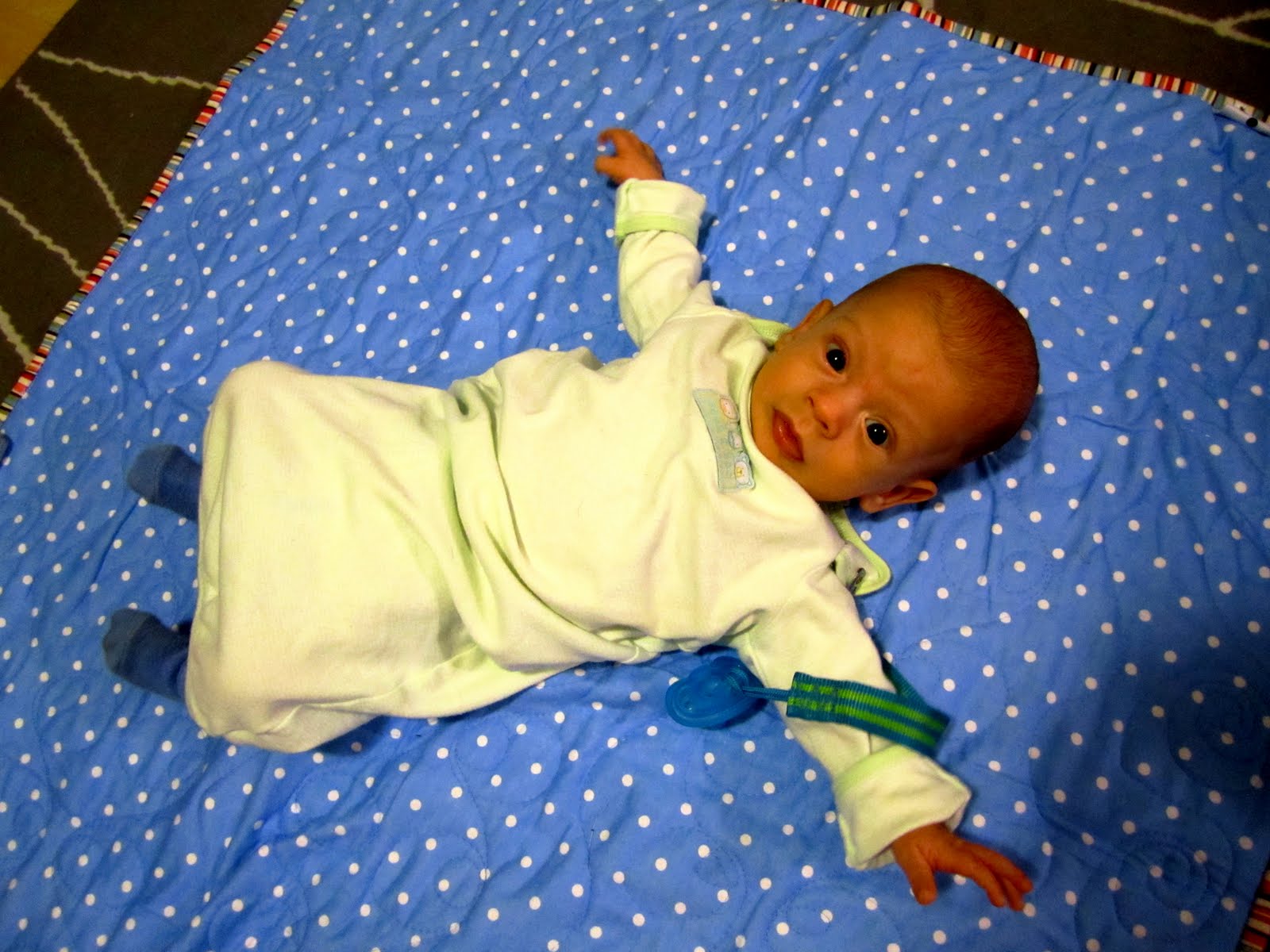 |
| The fuzzy back of the quilt. Desmond thinks it's luxurious. |
 |
| The quilt is folded up on the crib. Cute, eh? |
 | ||
| Me, our friend from school, and Ann. P.S. that's my poster in the background. Boo yeah. |
- Why did you start quilting? I started my first quilt 6 years ago when Erik and I got bored one day. Yeah, we got bored one day and started making a quilt. Funny, huh? But I didn’t consider myself a quilter until 4 years ago when pretty fabrics wanted to come home with me all the time and I needed some way to use them.
- What keeps you quilting? Quilting keeps me sane. It takes my full concentration and I can’t worry about life while I quilt.
- What's the hardest thing about quilting? Getting the pieces straight can been a big pain. I un-pick a lot of seams. My seam ripper should have a holster.
- How long does it take to make a quilt (i.e. where in the world do you find the time to do it)? Baby quilt tops can take a few hours. Adult size quilts can take me days, if I work on it consistently. Me and my mom once finished a king-size quilt top in 8 hours.
- What's your most favorite quilt OR who's your most favorite quilter? There are so many quilts in this world that it is hard to choose a favorite. My favorite out of the ones I have made is a quilt I made for my friend Lacy as a surprise gift. It was the first time I had ever made a quilt for a friend and I haven’t stopped since (I may have slowed a bit, but never stopped :).
- Something unique about you. The am unceremoniously average. But I have a good family, good friends, a good education, and a good job. I can’t ask for much more than that.
 |
| Baby quilt for sale on etsy. Look at that swirly stitching! Love it. |
Subscribe to:
Posts (Atom)


